Size a diesel filtration system in five steps: (1) define the duty - continuous maintenance, batch turnaround, or transfer filtration; (2) fix the tank volume and fuel consumption profile; (3) set a turnover target, which determines flow rate; (4) match capture precision to the fuel system served; (5) pick the model whose flow class and installation format fit - from 5 m³/h compact skids to 60 m³/h depot systems.
Step 1 — Define the duty, not the flow rate
Three fundamentally different duties hide behind the phrase “diesel filtration”:
- Continuous kidney-loop maintenance — keep an already-clean tank clean. Modest flow is fine; what matters is uninterrupted operation, water separation and regenerable media.
- Batch turnaround — recover a tank that has degraded (sludge, water, microbial debris). Higher flow shortens the outage and limits how long the tank is out of service.
- Transfer and unloading filtration — clean fuel at the moment it moves, when agitation releases tank-bottom contamination. This is the highest-flow duty and benefits from skid formats that can be positioned at the transfer point.
A site often needs more than one of these, which is why fixed polishing loops and mobile units are commonly combined.
Step 2 — Fix the tank volume and consumption profile
Record tank volume, typical fill level, delivery schedule and daily consumption. Two tanks of equal volume can need different systems: a 100,000-liter standby tank that burns nothing ages in place, while a 100,000-liter depot tank turning over weekly is continuously renewed by incoming fuel and outgoing demand. The consumption profile also decides how much redundancy matters - a tank that feeds emergency equipment cannot afford downtime during filtration.
Step 3 — Turnover target determines flow rate
Flow rate only has meaning relative to volume. A published guideline for continuous kidney-loop duty is to circulate roughly 5–10% of tank volume per day; batch turnaround of a degraded tank uses far higher rates to finish in hours rather than days. The check is simple arithmetic: hours per turnover = tank volume ÷ flow rate. Then ask whether that number matches the duty from Step 1 - a maintenance loop does not need to finish overnight, but a turnaround before a fleet mobilization does.
Step 4 — Match precision to the fuel system served
High-pressure common-rail (HPCR) injector clearances are in the 2–5 μm range, so “looks clean” is not a specification. Two rules keep comparisons honest:
- Insist on a stated filtration ratio - for Jingyuan systems, β ≥ 200 per ISO 16889 at the rated size, i.e. ≥ 99.5% single-pass capture - rather than a micron label alone.
- Remember water is a separate target: particle codes (ISO 4406) do not measure water, and the system should state a free-water outcome (Jingyuan systems control free water to ≤ 50 ppm by hydrophobic separation).
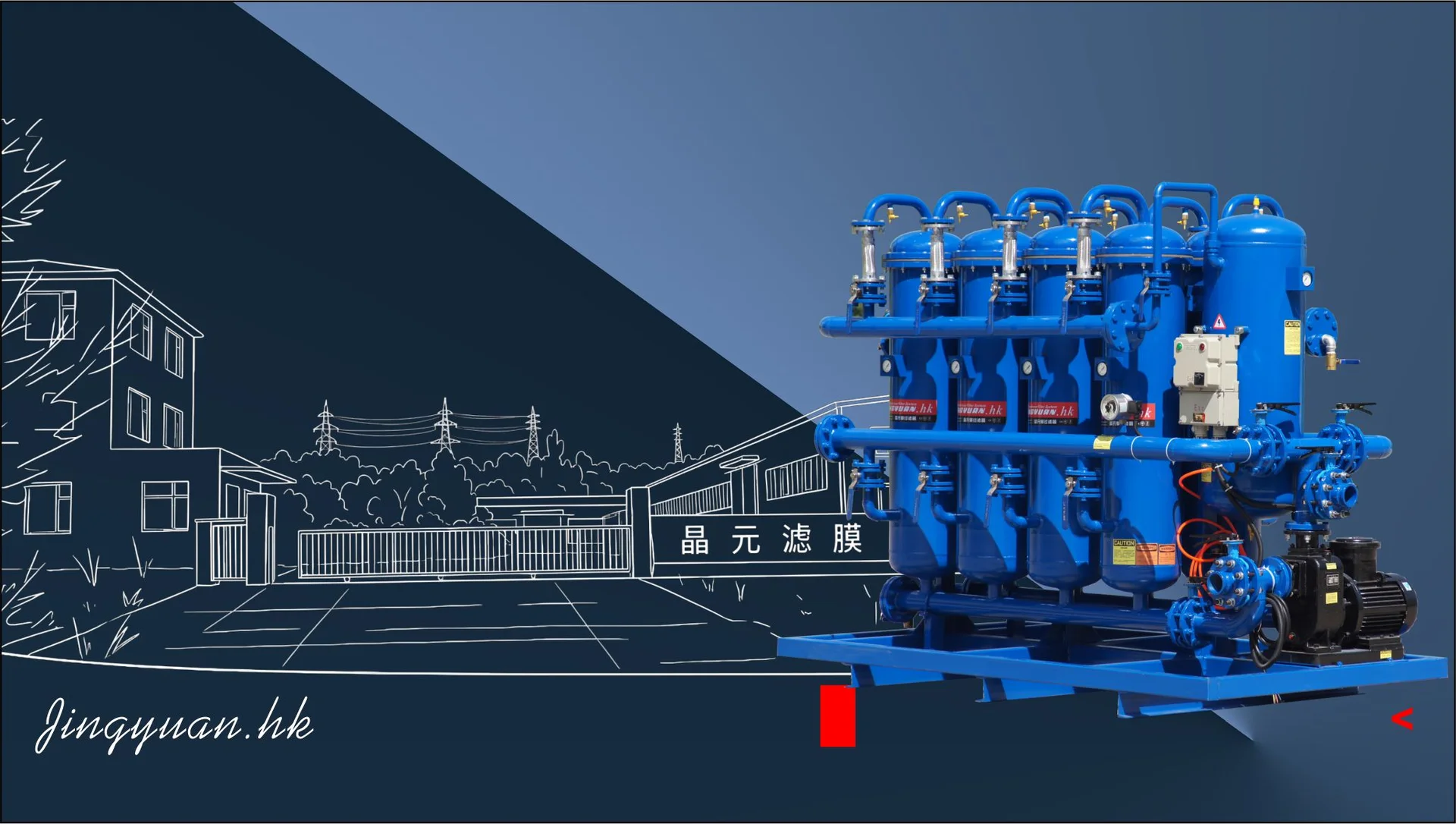
Step 5 — Match the model to the duty
| Duty | Better fit | Why |
|---|---|---|
| Compact machine rooms, small tanks, transfer work in tight spaces | JY-DX5 — 5 m³/h | Compact skid, 2–15 μm capture, room-temperature dehydration; integrated particle + water duty |
| Tank farms and fuel stations, batch turnaround, unloading filtration | JY-DX40 — 40 m³/h | Skid-mounted 8-membrane array, 2–20 μm selectable; fast backwash keeps turnaround short |
| Remote sites, containerized installations, lease power generation | JY-Q325 — 40 m³/h | Containerized high-flow station that travels with the operation |
| Large oil depots and industrial fuel supply | JY-DL60 — 40–60 m³/h | Depot-class flow, 2–3+ year membrane life, zero consumables design |
| Mining HPCR fleets, mobile multi-fluid duty | JY-G100 | Mobile purifier combining 5000 Gs magnetic adsorption for metal debris with rigid composite membrane filtration |
| Workshop lube oil maintenance | JY-H130 | Compact mobile lube oil purification for bypass maintenance |
Before finalizing, compare lifecycle economics, not purchase price: regenerable membrane systems avoid recurring cartridge purchases and hazardous waste - the mechanism is described in gas-pulse regeneration, which requires only a brief controlled safety shutdown (typically 5–15 minutes) per regeneration cycle.
Pre-purchase checklist
- Duty identified (maintenance / turnaround / transfer) and written down.
- Tank volume, fill profile and consumption documented.
- Turnover arithmetic done — hours per turnover stated for each proposed flow rate.
- Precision specified with a β ratio, not a micron label.
- Free-water outcome stated with a number.
- Media lifecycle understood — regenerable vs consumable, replacement interval, waste stream.
- Installation path confirmed — bypass loop, existing tank connections, no engine-supply interruption.
- Monitoring defined — differential pressure trends, regeneration alarms, water indication.
For a validated proposal based on actual site conditions, send us the tank data — or start from the FAQ knowledge base, which answers most first-round engineering questions.
Frequently Asked Questions
Is a bigger flow rate always better when sizing filtration?
No. Flow rate must match the duty: continuous kidney-loop maintenance, batch turnaround of a degraded tank, and transfer/unloading filtration all have different natural rates. Oversizing adds cost and can churn tank bottoms; undersizing simply extends the turnaround. Size from tank volume and duty, not from the largest available figure.
What filtration precision do modern diesel engines require?
High-pressure common-rail injector clearances are in the 2-5 micrometre range, so particle control must extend well below visible contamination. For polishing equipment, look for a stated filtration ratio (for example beta >= 200 per ISO 16889 at the rated size) rather than a micron label alone.
Can a filtration system be retrofitted to an existing tank?
Yes. Kidney-loop systems connect to the tank's existing bottom connection and return clean fuel to the top; no modification to tank internals or to the engine supply line is required. Tanks without a suitable bottom outlet can be serviced through a dip tube inserted from a top access hatch.
Related Articles
Related Products, Technology & Applications
All Filtration Equipment (23 Models)
The complete JY-series lineup in one catalog.
TechnologyFuel Polishing Methodology
Engineering rationale behind kidney-loop systems.
TechnologyFuel Asset Protection
From contamination control to asset preservation.
ApplicationsMining Fuel Polishing
Protecting HPCR equipment in harsh conditions.
ApplicationsCase Study Library
Field deployments by industry and model.
Knowledge Base97-Question FAQ
First-round engineering answers, searchable.